Nate
Tuesday, December 1, 2009
Info Vis
I started off by doing some research to find out what datasets are available. I found a lot of data on countries GDPs over time. I thought it would be interesting to find a way to display this data. My current idea is to have a map of the world that shows each countries GDP by shading in the country. I'll show my interface design in class.


Exercise 4: Information Visualization

Other programmers for KoC, didn't do much either like http://koc.ithildin.com/yar/stats
So I wanted to take it a step further and make something visually aesthetic yet functional at the same time. My first idea was a bar graph which would show the amount of "clicks" each player did during different time frames (past 24 hours, past week, past month etc..). Then I got to thinking about how the game was played and the competitive nature of it. I realized I should rank people and sort the bars, descending with the winner on one side. This winner could be different depending on the time frame.
Taking the competitve idea even further I thought of an alternate type of bar graph. This one would have a giant bar across the middle horizontally. This would be labeled the average. Then each player is shown in how they relate to the average. The best are above the bar, and the worst are below it. It would inspire the users to compete to make it above the average which would in turn move the bar creating a dynamic and fun game. Also players would check back w/ the charts frequently to see if they are maintaining they're lead which is a sign of success in the program! Especially considering it could increase Ad revenue! ( Now i just need ads...).
One final thought I was playing with is the idea of using the width of the players bars to show something. The data that I tracked was merely how much was clicked at which part of the day. I'm considering using total clicks as width, regardless of time frame, but I think there could be something better. Also I'm thinking about ways to use colors still.
Assignment 4 (Garrett)
I am going to create an interface where one can visualize election
returns. It will feature a map with the number of electoral votes on
each state. Color strength on each state can indicate the percentage
of republicans and democrats. Clicking on a state will bring up more
specific information such as polling data, historical voting data, and
percentage popular vote.
returns. It will feature a map with the number of electoral votes on
each state. Color strength on each state can indicate the percentage
of republicans and democrats. Clicking on a state will bring up more
specific information such as polling data, historical voting data, and
percentage popular vote.
Assignment 4 (Barry)
I am planning to visualize a weather forecast of new york state. The Idea is to have a big map of the new york state which have region colored based on the weather forecast of that day. It will have a dynamic query on the bottom that can be dragged backwards to represent past days like yesterday, past week. It can also be dragged forward to show tomorrow forecast, the day after tomorrow and so on. It also has a area created to name all the major cities in New York so that you could select which area you wanted to go. You can click on the name of the city or the region in the map. When you do, it will bring you to a separate page of the city forecast. In that page, it will provide you with a more detailed forecast like the temperature, when it rains, humidity, wind and so on.
Assignment 4 (Bin Bao)
Air ticket search engine is widely used by ticket booking website. I am planning to visualize the one-way air ticket from Rochester to Beijing, by drawing lines on a map, the shading of these lines will represent prices. The dynamic query may include date, price, airline, stop number. The departure date can be an exact date or a range. For a date range, how to represent the price fluctuation is a challenge.
InfoVis
I am going to create a visualization of census data (race/age/income). I figure the most natural way to do this is to have a map of the United States and color the map to show the number of people in each category. The map will show the colors based on the number of people or the percent of whole. The fact that each category of data has multiple data points, you will select which data point you will want to see (18-25,80+, black, white), and it will color the map based on that. Another option would be to color the map based on the average as well as on the most prevalent, potentially even eliminating certain data points (i.e. to remove Caucasian to view which minority is prevalent in certain areas).
James J Regan IV
COO Emeritus Consulting
B.S. Computer Science
B.A. Linguistics
University of Rochester
Class 2010
Tuesday, November 10, 2009
menu system
Concept 1:
<font color="green">The left side contains the menu categories such as kids adults and desert by clicking on one the right hand side will show you a non detail list of what is in that category by clicking on the item you will get to see a larger description
</font><table style="color: blue" border=2>
<tr><th><h2>good points</h2></th><th><h2>Bad points</h2></th>
</tr>
<tr>
<td>looks organized</td><td>might be to complicated</td>
</tr>
<tr>
<td>Everything is easily accessed by one menu</td><td> Since its a touch screen how can people type in special request <br/> onclick = show on screen keyboard?</td>
</tr>
</table>
Concept 2:
<font color="red">Not really that proud of this one The top allows you to search and then the bottom has a pre-sorted menu </font>


Exercise 3: Sketches and Prototypes
I've been sketching prototypes of a menu system based loosely (OK, maybe not that loosely) on Apple's "Cover Flow" interface paradigm, where users—via a touch interface—can manipulate a list of items by swiping left-to-right, right-to-left, etc. I created a quick PICTIVE mockup on posterboard that should get my point across.
--
Wyatt Anderson
wanderson@gmail.com
--
Wyatt Anderson
wanderson@gmail.com
Sketch Restaurant Menu
Ahmad Abdul Bari Muhammad Firdaus
27047941
I drafter a few sketches based on the knowledge that I know when I shop for things online like ebay and amazon. I come up with a simple structured online menu. On the top of the menu, it has tab for entree, appetizer, drinks, deserts, specials and combos. Once a tab is selected, it will has another tab level that will separate the category of the food. For example, if you click on entree, it will have tabs separated for rice, pasta, spaghetti, pizza and so on. After a category of food is chosen, it will have a list of food on the left with the price. Some list of favorite items might have a small picture of the food. Once a person select an item, the menu would be highlighted and 2 box appeared. The first box has an up arrow icon. When the user click it, it would add up to a chart. The second box does the reverse. When a menu is highlighted, there will be a big picture of it on the right and it has information on that item like description, ingredients, spiciness. A more info button can also be click that would put the user to a more detailed page on the menu. This could include testimonials, and maybe some recommendation that other user like when ordering it. The user can simply click back for going back to the previous menu. Below the description is the cart which has like all the stuff a user wanted to buy. But I think this might be a bad idea as user can simply be overwhelmed by the price and might make less orders. Lastly, there is a submit button that shows that the user are ready to order and that the waiter can just pick it up and start processing the order.
27047941
I drafter a few sketches based on the knowledge that I know when I shop for things online like ebay and amazon. I come up with a simple structured online menu. On the top of the menu, it has tab for entree, appetizer, drinks, deserts, specials and combos. Once a tab is selected, it will has another tab level that will separate the category of the food. For example, if you click on entree, it will have tabs separated for rice, pasta, spaghetti, pizza and so on. After a category of food is chosen, it will have a list of food on the left with the price. Some list of favorite items might have a small picture of the food. Once a person select an item, the menu would be highlighted and 2 box appeared. The first box has an up arrow icon. When the user click it, it would add up to a chart. The second box does the reverse. When a menu is highlighted, there will be a big picture of it on the right and it has information on that item like description, ingredients, spiciness. A more info button can also be click that would put the user to a more detailed page on the menu. This could include testimonials, and maybe some recommendation that other user like when ordering it. The user can simply click back for going back to the previous menu. Below the description is the cart which has like all the stuff a user wanted to buy. But I think this might be a bad idea as user can simply be overwhelmed by the price and might make less orders. Lastly, there is a submit button that shows that the user are ready to order and that the waiter can just pick it up and start processing the order.
Menu Design

My other designs were based around a division of menu items by "drinks," "appetizers," and "entrees" which I felt wasn't creative enough, no matter how original you make the design its architecture is essentially the same. So I stepped back and used simplicity to break the cycle and the result became my favorite prototype!
-Donato Borrello
Entry #3
I first sketched a few designs without looking at my design ethnography. I wanted to see what I would do without worrying about the details from that report. After reading the report I realized that I left out a few key features in my early sketches. Once I had a design I liked I made some more sketches to refine my ideas. I also made some sketches that showed detailed functionality of on feature of the design. Finally, I made a low-fi design based on my sketches. I will show my sketches and low-fi interface in class.
Nate
Monday, November 9, 2009
Storyboard
I drafted a few sketches based on my design ethnography study of ordering from a menu, as well as from other examples of interfaces designed for the surface PC. I looked at the tasks that I created in the paper and designed interface features that would help solve those tasks. Also, because of the large nature of a surface PC I did not restrict my design to windows. After coming up with a few designs of the parts of the interface, I created a storyboard to illustrate going through the design step-by-step, from sitting down at the table to placing the order.
James J Regan IV
COO Emeritus Consulting
B.S. Computer Science
B.A. Linguistics
University of Rochester
Class 2010
Sunday, November 8, 2009
Menu Sketch Descriptions


so, I started off with a more traditional menu--probably because it is what seemed more natural. I created tabs for different pages instead of having the menu scroll. each tab would be named with a category head for each of the spreads of dishes. I also wanted a way for special options to stand out. here I had them have a different background from the rest of the menu in order to create contrast. Finally, the most interesting part of this menu was that you could drag and drop dishes onto a meal timeline to indicate when you want different dishes served.
this next picture tries to highlight different ways to browse a menu. it differentiates with different tabs. the tab shown is the search. it allows you to create lists of ingredients you are interested in and lists of allergens/ingredients you are not interested in. also, there is a considerations list along the side that allows one to drag and drop different dishes onto this list so that one can decide which they want at a later point in time.
finally, here is my last menu. the left panel has the same considerations list that was present in the previous example with the addition of a random selection button. this button allows for one dish in the considerations list to be randomly added to the "receipt" list the center is a list which resembles a more traditional menu. the upper right panel has a place where one may limit the visible menu by different criterium (ingredient desired, allergens, course, et al). finally the lower right panel is the "receipt" list of elements that are to be ordered--with an order button.
- sid
Tuesday, October 13, 2009
Lib website
River Campus library:
Layout:
I just noticed the library website has a very good layout and design:
Very nice colors
Links on top stands out very well (white letters stand out very well with dark blue colors)
Very clean and simple layout
Searching:
Very complex searching.
An average person would not know how to use it.
Weird implementation of boolean
Interface:
Navigation was easy as links stand out in main page
Tabs in the search make it easy to navigate
Every search looks and works differently so a user will have to learn how to use each
By Darly Paredes
HotWire.com (Parish)

It was easy to select dates (i'm slowly begining to become a fan of the rich date-selection-calendar idiom), search type (flight, hotel, car, flight + hotel, flight+hotel+car, hotel+car) and orgin and destination locations (these selectors could both benefit from intermediate results). Picking "flexible" trip dates was rather less than intuitive and one area of usability which could use improvement.
However, once a search was constructed, the information was returned sub-optimally. The possible flight options were presented to look somewhat similar to an airline boarding pass, I'm not convinced this is the best way to convey this information. Additionally, there was no way to sort by options other than price and number of stops. As the particular flight featured predominantly early departures, I would have been interested in seeing other flights which departed later in the day for a slightly higher price. Bi-handle selection sliders for time of arrival and departure would do much to ameliorate the issue.
However, once a search was constructed, the information was returned sub-optimally. The possible flight options were presented to look somewhat similar to an airline boarding pass, I'm not convinced this is the best way to convey this information. Additionally, there was no way to sort by options other than price and number of stops. As the particular flight featured predominantly early departures, I would have been interested in seeing other flights which departed later in the day for a slightly higher price. Bi-handle selection sliders for time of arrival and departure would do much to ameliorate the issue.
Better typography with more whitespace and better presentation of data will increase usability.
Hotwire.com
Inputting my information was really easy. I loved the calender pop-up when I was choosing a date, and the auto complete while typing city names was really nice too!
However, if you input invalid information (like leaving the second date blank), the screen flashes and a bunch of prices/offers appears on right side of the website. I thought this meant they had found information, but I have no clue what the info was related to, because when I submitted valid information the entire website format changes (bad consistancy!). The new design was boring in colors and the information was far too cluttered, making it stressful to look at!
It seems like the home page is a lot more finished then their results from search page, which is kind of weak in comparison.
-Donato Borrello
However, if you input invalid information (like leaving the second date blank), the screen flashes and a bunch of prices/offers appears on right side of the website. I thought this meant they had found information, but I have no clue what the info was related to, because when I submitted valid information the entire website format changes (bad consistancy!). The new design was boring in colors and the information was far too cluttered, making it stressful to look at!
It seems like the home page is a lot more finished then their results from search page, which is kind of weak in comparison.
-Donato Borrello
Exercise 2: Interface Evaluation
At first glance, the HotWire.com website, while not exactly cutting-edge in terms of web design or overtly beautiful, appears usable. The "Rate Locator" pane is highlighted and very visible, and if I'm searching for a cheap airplane fare, I can do it immediately without much searching of the page. The icons for search type (the hotel bed, etc.) are helpful. Upon searching, the cheapest result is immediately presented, and the listing of airfares is presented appropriately. Navigation to other pages is simple and reasonably presented.
There isn't much contrast in terms of page elements, however, and the gray color of most page elements makes it difficult to determine what elements on the page are important. I think it would be good to design potential user observations around performing these basic tasks like searching for a flight, hotel room, etc., then perhaps mixing it up by adding a task such as filtering a flight search, adding more complex options, etc.
--
Wyatt Anderson
wanderson@gmail.com
--
Wyatt Anderson
wanderson@gmail.com
Exercise 2: Interface Evaluation
The main purpose of the River Campus Libraries' website is to help students, staff, and faculty locate physical and digital resources including books, articles, videos, and journals. In the past, I have found this tool frustrating. First, the search often fails if you input a query in even a slightly different format than the format used in the resource's entry. Second, I have found a variety of annoying and confusing interface bugs. However, for the purpose of this blog entry I looked at the cite to see what tasks I might have my users do in a usability study.
Since, the whole point of this cite is to locate resource most of my task will probably ask the user to locate something using the system. Resources can be located by title, keyword, author, journal, call number, and a few others. I will probably have people locate a book using some of these different restricted searches. I would also like to give people different sets of information about a book and ask them to find it without telling them which search to use. Do they look it up by the title or the author?
I also want to explore tasks that begin once a book has been found. For example, how does the user find other books by the same author? Does the cite provide the flexibility to do things like this in an intuitive way?
Lastly, I would like to create tasks that test basic navigation. Can the user easily return to the homepage? Does the user understand where links should take him before he clicks.
Nate
Exercise 2 - Interface Evaluation (Garrett Hall)
The hardest tasks in the River Campus Libraries site are those which are hard to navigate to, such as "find the call number for all UR Botany dissertations." The main navigation buttons are blue like the background so there is not enough contrast, but the alignment of items appears correct. The breadcrumb link on the top and contact info on the bottom of the page is consistent throughout. However, the navigation is not always what one would expect, for instance "Renewing Borrowed Materials" appears under "Requesting and Borrowing" as a breadcrumb, but both links are on the main page. Overall the interface seems good, but could use improvement.
Hotwire Observation
When I first sat down to start using Hotwire, I found it reasonable
intuitive to select a city and date. However, after selecting these
specifics the site became more tedious to use. Because of the site's
business model (letting you select a hotel at random--only knowing a
rough location and the cost per night) I found it hard to
differentiate between my selections. Because there was no clear winner
in my mind, I got lost in the red and white of the interface. I
finally realized after 15 min that I was reading the same generalities
about a location that I did not actually intend to visit. Because of
the limited information about each location, choices that I make feel
even more superficial; I find myself always wanting the least
expensive option available.
-sid
intuitive to select a city and date. However, after selecting these
specifics the site became more tedious to use. Because of the site's
business model (letting you select a hotel at random--only knowing a
rough location and the cost per night) I found it hard to
differentiate between my selections. Because there was no clear winner
in my mind, I got lost in the red and white of the interface. I
finally realized after 15 min that I was reading the same generalities
about a location that I did not actually intend to visit. Because of
the limited information about each location, choices that I make feel
even more superficial; I find myself always wanting the least
expensive option available.
-sid
Monday, October 12, 2009
Hotwire Evaluation (Barry)


The alignment can be improved so that the website looks more attractive and organised. The proximity for this website is hard for me to tell. It does not seem out of place to me. Its pretty easy to use and it even has a "change your search" menu at the left which I found very usefull. The only thing that bothered me is that when you look for flights + hotel, it will give you the price details under the total price which show me the price of hotels and flight if bought separately and what the discounts are if I bought them together. However, if I look at flights + hotel + cars, it just give me the total with no price details. So there is an inconsistency there. WIth just the total being stated, I am not sure if I get discount, paying full price or get ripped off without calculating the price myself.
Exercise 2 (Bin Bao)
From a software implementation perspective, library website is an interface to the underlying database. So it should provide common database functionality, including search, limited insertion and deletion (user side). Good searching interface is probably the top goal of the whole design. I need to come up with searching tasks, from simple to difficult. But I am not sure how difficulty a searching task usually is in a real usage. In other words, it may not be practical if we create a hard task.
Hotwire Evaluation
In all, I found hotwire.com a relatively easy-to-use intuitive system to simply get a deal, however there are some big issues that I noticed if you want to make the most out of it. The biggest is that when you choose a package you lose a lot of the benefits of using hotwire.com in the first place, the ability to get the cheapest tickets because you do not know what you are getting when you book them. Also, you are only given a choice of hotel and it somehow chooses a hotel and car rental for you, granted you can change this through different links but its not obvious you can do this and its hard to tell exactly which part of the trip is the most/least expensive. Also, in order to make your dates flexible you have to click on an obscure link "planning tools" and then on the flexible planning, but that is only flights and there is no way to incorporate hotels or car rentals in that search. Lastly, the amenity icons are slightly confusing and obscure and so you need to hover over them in order to understand what they are about.
James J Regan IV
COO Emeritus Consulting
B.S. Computer Science
B.A. Linguistics
University of Rochester
Class 2010
Thursday, September 24, 2009
HCI - Understanding Biases
Chipotle
The Chipotle Restaurant has a very unconventional menu system. There was nothing to hand out, it was all written on banners hanging from the ceiling behind the counter. Admittedly it was a little unprofessional, giving away some information about their pending liquor license and the soon to be margarita's. I found this to be "unprofessional" because to me, that type of information doesn't belong on a menu!! The menu was also very small, with just a few options of meals to get. However once you made your choice you could customize it while they were building your burrito or taco, by choosing what to put inside it! Unlike most restaurants with a lot of choices but little customization (such as rare, medium or well-done on meat), this restaurant had few choices but tons of options (what type of rice and beans? chicken? hot or mild? etc etc).
Overall I liked the system, it felt really casual because of the blithe posters regarding their liquor license and also because of the interaction with the person preparing your food as you chose what you wanted on your food.
-Donato Borrello
The Chipotle Restaurant has a very unconventional menu system. There was nothing to hand out, it was all written on banners hanging from the ceiling behind the counter. Admittedly it was a little unprofessional, giving away some information about their pending liquor license and the soon to be margarita's. I found this to be "unprofessional" because to me, that type of information doesn't belong on a menu!! The menu was also very small, with just a few options of meals to get. However once you made your choice you could customize it while they were building your burrito or taco, by choosing what to put inside it! Unlike most restaurants with a lot of choices but little customization (such as rare, medium or well-done on meat), this restaurant had few choices but tons of options (what type of rice and beans? chicken? hot or mild? etc etc).
Overall I liked the system, it felt really casual because of the blithe posters regarding their liquor license and also because of the interaction with the person preparing your food as you chose what you wanted on your food.
-Donato Borrello
The Biased Bistro Menu (Parish)
To prepare for the upcoming project--after having becoming increasingly disenchanted with other campus cuisine--I decided to treat myself to lunch at the Meliora Resturant. This on-campus dining gem went undiscovered by my fellow freshmen and I until later in the second semester, but provided a respite from the fried, homologous food of Danforth, The Pit, and Douglass.
Last week, I went in opened the menu, gave it a quick perusal, and instantly ordered the Meliora Burger. I came to the conclusion that the menu hadn't influenced my ordering at all. I had known a priori what I wanted to order before I even entered the resturant. An important personal bias (and possibly a general trend to investigate) to reconcile when conducting further study into the design of an ordering system.
Understanding My Biases
I went to the Olive Garden the other afternoon for lunch with a group of friends and tried to keep in mind the goals of this exercise as I ordered lunch. I found that this was perfectly exemplary of bias, since the only reason I usually go to Olive Garden for lunch is for the unlimited soup+salad+breadsticks combo. As such, I usually won't even open the menu, unless I'm feeling particularly bored. Similarly, whenever I eat at a place like Olive Garden that doesn't really have a very dynamic menu offering, I often know what I want by the time I'm sitting down, and the only variety I'll introduce is in my wine or beer choice, it seems.
Thus, in designing a new menu system, I think it's important to keep in mind users who might only order from a limited range of the menu. In essence, I think it's important to determine a presentation of menu items that affords the most natural ordering and grouping of menu items so that people can quickly jump to sections which they might be familiar with. However, I also think that it's probably important to maintain some presentation of "special" or new items that the restaurant owner might want to promote.
ihop


- Well organized
- Nice color scheme
- Good variety
- Top sellers of each category were always shown first
Bad thing
- Too big (it was about 8pg)
- They should have had more pictures of the food
- The edge of the menu gave me a paper cut
Final Grade
- 6 out of 10 (that paper cut brought the value from a 9 to a 6)
Blog Post #1

I went to John's Tex Mex Eatery to do an observation for assignment #1. This outing exposed some of my biases and habits in a restaurant setting.
First, I rarely order a drink other than water. So when the waiter is giving the drink options, I usually don't pay attention. Therefore, it is possible that during the interface design process or during my observations I might glaze over some important aspects of the drink ordering exchange.
Second, when I finish eating I usually move directly to the matter of paying the check. However, many people don't think about it until the waiter brings it to the table. Some people feel pressured to leave when the check arrives; I simply feel that it gives me the option to leave. Perhaps the restaurant system should have a "bring check" option. This would allow people to get the check when they wanted it.
Recognizing these biases should help with my remaining observations and design suggestions.
Nate Snyder
Wednesday, September 23, 2009
Exercise 1 - Understanding Biases (Barry)
My choice of menu restaurant is Wok with you at Park Point. I don't like how they distribute their menu. It has 3 separate menu consist of menu for main menu, sushi menu and drink/desert menu. The reason why I do not like it is because sometime it only gives 1 menu for sushi per table and we have to request for it if we want more menu for sushi. Won't it be easier to just put it in one menu? Also I think that me and my friend usually decide on what we should have for drink first before eating so it would be best to have the drink menu at front. When I first come to this restaurant, I was browsing looking for drinks, just to found out that it was on a separate menu! They also do not state what soft drinks they have.
Secondly, I think the menu is also very plain and lame. It has no picture associated with the food at all even though it has varieties of food like thai food, chinese food, dimsum and sushi. The font are small and the spacing of the words seem to be close making it look messy and harder to read. Sometimes the menu has a lot of redundancy word.
So usually, when we come to this restaurant, we already know what we need to buy because we do not want to be bothered by the poorly design and unattractive menu.
Secondly, I think the menu is also very plain and lame. It has no picture associated with the food at all even though it has varieties of food like thai food, chinese food, dimsum and sushi. The font are small and the spacing of the words seem to be close making it look messy and harder to read. Sometimes the menu has a lot of redundancy word.
So usually, when we come to this restaurant, we already know what we need to buy because we do not want to be bothered by the poorly design and unattractive menu.
Ordering Bias
Even before I got to the restaurant I had an idea of what I wanted to eat and so my goal when first looking at the menu was to find if they had what I wanted to eat. In design, this could be accomplished by using some sort of ingredient picker to find items that might have a flavor you are interested in. Also it is important that when you first sit down the waiter takes your drink order first so if you have a digital menu you should be able to make your order as soon as you sit down. Also when the menu items aren't accurate or clear enough you have the option to ask the waiter. Lastly dessert is almost always ordered AFTER the meal so it is important that menu not turn off and not be usable again once you order.
James J Regan IV
COO Emeritus Consulting
B.S. Computer Science
B.A. Linguistics
University of Rochester
Class 2010
Exercise 1 (Bin Bao)
I had a lunch in Soul Garden this Monday. It is not surprising that having lunch in a non-fastfood restaurant is quite different from having a dinner, especially when the restaurant provides a Lunch Special menu. People tend to order from that special menu, because the food is usually cheaper and faster. When designing a menu system for our assignment, I will not consider this special case, unless have extra time to extend it.
Based on the experiences my friends and I have, I plan to target my system to a Chinese restaurant. In terms of biases, I have the following items in my mind:
1. Most of my friends are just graduate students, who are probably sensitive to the price.
2. As a guy, I think most guys are more interested in ordering meat.
3. People like to ask their friends for suggestions when ordering.
4. People like to order the recommended food from the menu.
5. People like to order food with pictures.
Based on the experiences my friends and I have, I plan to target my system to a Chinese restaurant. In terms of biases, I have the following items in my mind:
1. Most of my friends are just graduate students, who are probably sensitive to the price.
2. As a guy, I think most guys are more interested in ordering meat.
3. People like to ask their friends for suggestions when ordering.
4. People like to order the recommended food from the menu.
5. People like to order food with pictures.
Exercise 1 - Understanding Biases (Garrett Hall)
I chose Taco Bell as the restaurant chain to study. After visiting one of the locations, I realized Taco Bell has the following advantages:
A) All my friends are familiar with the menu which will reduce bias of my order affecting their order.
B) Menu items are close in price which reduces the bias of the price of my order affecting my friend's order (which happens—I don't order filet mignon if everyone else gets cheeseburgers).
C) The menu is complex enough with substitutions and combinations to necessitate some kind of ordering interface.
D) Sitting down at Taco Bell I can collect as many observations as I need to.
Ordering Tendencies
Last night I went out to Buffalo Wild Wings with some friends, and
picked up the menu. Being mostly vegetarian and completely picky, I
started looking for items that I would think about eating. I noticed
that I started with entrees, moved to appetizers and finally looked
over the side options. After making a rough list of foods I would eat
and loosely ranking which ones I wanted most, I began to discuss what
others were looking at, if they were getting a drink or an appetizer
etc. I found that the discussion that followed had the greatest impact
on which items I wanted to order (whereas the initial run through of
the menu was mostly taking things out that I wouldn't want).
-Sid
picked up the menu. Being mostly vegetarian and completely picky, I
started looking for items that I would think about eating. I noticed
that I started with entrees, moved to appetizers and finally looked
over the side options. After making a rough list of foods I would eat
and loosely ranking which ones I wanted most, I began to discuss what
others were looking at, if they were getting a drink or an appetizer
etc. I found that the discussion that followed had the greatest impact
on which items I wanted to order (whereas the initial run through of
the menu was mostly taking things out that I wouldn't want).
-Sid
Tuesday, September 22, 2009
Good and Bad Design


Bad:
This GE toaster oven, generously donated by Grandma Snyder, makes crisp toast and delicious broiled fish; however, its controls are poorly designed.
In order to toast, you must turn the top knob to 450 degrees, the bottom knob to "Toast" and the middle knob to the desired toasting time. The flaw is that you must turn the top knob to 450 in order to toast or broil. The top knob should only be necessary when using the bake function. This was clearly a known design flaw that was covered up by the notation on the bottom knob: "Set Oven ℉ to 450". Properly designed, the top knob should only be used for the bake function.
Good:
Since we see this type of sign everyday, we take for granted its design. In an instant this sign tells me that there is a bathroom behind this door and that it is for men and not women. By utilizing a universal cultural convention that women wear dresses and men wear pants it tells us this without words. The english word "man" could be added to the sign but it really would not add any extra information.
This GE toaster oven, generously donated by Grandma Snyder, makes crisp toast and delicious broiled fish; however, its controls are poorly designed.
In order to toast, you must turn the top knob to 450 degrees, the bottom knob to "Toast" and the middle knob to the desired toasting time. The flaw is that you must turn the top knob to 450 in order to toast or broil. The top knob should only be necessary when using the bake function. This was clearly a known design flaw that was covered up by the notation on the bottom knob: "Set Oven ℉ to 450". Properly designed, the top knob should only be used for the bake function.
Good:
Since we see this type of sign everyday, we take for granted its design. In an instant this sign tells me that there is a bathroom behind this door and that it is for men and not women. By utilizing a universal cultural convention that women wear dresses and men wear pants it tells us this without words. The english word "man" could be added to the sign but it really would not add any extra information.
- Nate
Wednesday, September 16, 2009
Bad Design (Bin Bao)

but is "standby". But it is so counter-intuitive, because that little
button is so widely used as symbol for shutting down in our daily
life. I once showed my vista (English version) to my cousin, and she
doesn't know English at all. She said: I don't know English, but I
know how to turn the computer off. Then she clicked that icon, but
didn't get what she expected. Well, don't challenge people's general
knowledge about the world.
(I don't have windows vista installed now, so the picture is from the internet)
Good Design (Bin Bao)

my TV as well. It automatically matches with my TV and requires no
extra human interference. It doesn't support all functions as my TV
controller does, but does have two key features, turning on/off TV and
adjusting the volume. Another key feature, changing channels, relies
on the dish receiver. This extra TV support is simple and effective,
which gets rid of the headache of switching between two controllers.
Friday, September 11, 2009
Good design

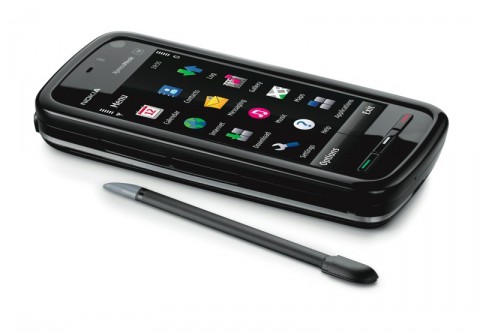
The nokia 5800 is a good design hand phone. It has a touch screen that is highly responsive and you can change the view of the screen from landscape view to portrait view. The hand phone is really light and the size is just right.
The interface is easy to navigate and it has a higher resolution compared to older model phones but it has a flaw on the gallery (they cannot separate pictures into separate folders). You can open many application simultaneously without lagging the system.
It also has quality speaker and you can use it to access the internet using WI-FI just like an i-phone. It has a good quality camera at 3.2 pixels with a lot of additional function like night mode and close up.
At the bottom of the phone you have three button which has green, white , and red colors in the middle of it. Green button can be used to call someone, white is used to open the menu and also has a notification light in case you got a miss call or a message. The red button will exit everything and go to the starting point.
Overall it is a good design and easy to use.
Bad design

Moreover, the fan makes an incredibly loud sound. This happens because the fan moving really fast even at low speed. I am a really fan of quietness so the loud sound of the fan really annoys me. I usually just open the fan at low speed because it sounded less noisy compared to medium and high speed for obvious reasons. And I even might turned it off and rather be hot then be annoyed by the noise.
This fan can also attracts a lot of dust to it. With its weird shaping, the dust got stuck in the front of the fan and its cover. It is also hard to clean the fan from outside because of the shape. You have to open it and I have no idea how to because it looks different than other fan.
Overall, I found this fan rather annoying and somewhat bad yet I am still using it because I do not want to spend more money on a new fan.
Thursday, September 10, 2009
GREAT design

This device is one of those things that you see and use every day but really but really don't come to appreciate it until you take time off and admire its simplicity. Its only has one switch to control it. The switch can be in 3 positions:
Left – for hot
Middle -for off
Right – for cold
On the top it has a handle for easy carrying and the surface and the inside is made of a material that can be cleaned very easily. Inside there is a self which you can remove to add more space. The door is very easy to use. Turning the knob will unlock it, and it will automatically lock when you let go of the knob. It's also light weight compact and cute!
Bad design


**The bath sponge which I had, looked like the blue bath sponge presented but it was modeled after Patrick star from the cartoon Sponge Bob Square Pants
It's also hard to notice bad design, when I first bought this it looked like pretty cool and I thought to myself this is a pretty nice design. But when I used it for the first time I noticed that
The eyes would scratch me.
It was made out of a weird material so it would fell weird when rub against your skin.
The Bath sponge had pants so I could only use half of it to take a shower.
Overall this product had no good points other than making bath time a complete and total pain.
By Darly Paredes
Bad Design - Donato
http://images.intomobile.com/wp-content/uploads/2007/06/sprint-samsung-upstage-m610-red-2-copy.jpg
This phone was designed to have the ability to be used as an mp3 player in addition to as a phone. To make it "sleek" and "cool" they put the mp3 player on the back, and screens on both sides! In order to switch functionality you have to press a button on the side. While I don't have a lot of personal experience with it, my mother simply can't answer the phone! My best guess is that it is stuck on mp3 player functionality (which she also can't figure out) and thus the phone part isn't allowing her to accept the phone call. She at first thought the phone was defective and had it replaced only to find that the phone is working as it was designed: poorly.
This phone was designed to have the ability to be used as an mp3 player in addition to as a phone. To make it "sleek" and "cool" they put the mp3 player on the back, and screens on both sides! In order to switch functionality you have to press a button on the side. While I don't have a lot of personal experience with it, my mother simply can't answer the phone! My best guess is that it is stuck on mp3 player functionality (which she also can't figure out) and thus the phone part isn't allowing her to accept the phone call. She at first thought the phone was defective and had it replaced only to find that the phone is working as it was designed: poorly.
Good Design - Donato
http://upload.wikimedia.org/wikipedia/commons/thumb/c/c0/Xbox360_WiredController.jpg/800px-Xbox360_WiredController.jpg
The xbox wire is one of the more clever innovations I've seen in wires. It has the ability to come apart near the connection to the Xbox. The purpose of this is to protect the user from potentially pulling the Xbox off the shelf if the user is moving too far away from it. This is actually really effective, it has saved me once already! It also doesn't come undone accidentally, it has the perfect amount of strength, I've never had it randomly come unplugged. So it was a basic improvement to a typical wire, with no perceived draw back, but with a huge fiscal benefit in protecting your expensive Xbox purchase!
Bad Design: Speaker Case (Joel Parish)

It turns out that it is a 6-step process to put the headphones into their case. It has no obvious affordances of which direction to place the headphone in, nor, that one must rotate both headphone arms 45 degrees to insert into the headset, nor that the spindle around the edge of the case is meant for wrapping the cable. The closing bar-cover only rotates one direction, but is confusing as to which, and is extremely difficult to open without fear of breaking the device.
Good Design: Volume Control for Computer Speakers

It has a large knob for volume (even labeled volume!) and a smaller knob for bass. + and - are written beneath each knob to hint at directions and a small dot is indented to indicate the knob's current position. A power button toggle pop in to power and out to turn off with a standard closed-circuit-power-button metaphor icon.
For advanced users two more options are available: plugging in a headset into the minijack with the headphone's next to it shifts output from the speakers to the headset for less-intrusive listening. Also, the mini-jack with the music note affixed allows the user to overwrite the input with an auxiliary music source (e.g. an iPod). While using either of these all the rest of the controls still function as expected, and rapid muting by turning the volume control knob is a very thing to have in dorm life!
Bad Design (Wyatt Anderson)

Quite the contrary, however, as the LG Voyager is crippled by awful, locked-down Verizon software, cluttered with too many buttons and switches, and has a clumsy, hard-to-activate touch screen which really affords no new functionality (the phone has a "hard" keyboard, unlike the iPhone, which affords much greater functionality than the piss-poor excuse for a virtual keyboard on the front of the clamshell unit).
--
Wyatt Anderson
wanderson@gmail.com
--
Wyatt Anderson
wanderson@gmail.com
Good Design (Wyatt Anderson)

--
Wyatt Anderson
wanderson@gmail.com




Wednesday, September 9, 2009
Good Design (James Regan)
High Sierra Access Laptop Backpack

My backpack is an example of a really good design. It has a place for everything that is logically placed in the backpack. For example, it has a special pocket for the laptop which has an additional (adjustable) strap so the laptop will not move around even if its the only thing in the backpack. Also, there is a pouch at the top of the backpack with a small hole which is used to put a CD or MP3 Player and have your headphones come out of the hole. Another nice feature of the backpack is that it has pockets specifically designed for pens or pencils, for a calculator and for a cellphone. Lastly a nice touch, one I haven't used often but occasionally, is there is a plastic cover attached to the bottom of the backpack hidden in a zipper which fits over the backpack and acts as a water shield to protect your laptop from rain. The reason I've not really used it is that the backpack is well designed and is pretty waterproof on its own and the water shield looks kind of ridiculous, but it is a good idea and a good design that might help sell a couple of more backpacks over their competitors.
James J Regan IV
COO Emeritus Consulting
B.S. Computer Science
B.A. Linguistics
University of Rochester
Class 2010
Bad Design - (James Regan)
The George Foreman 360 grill:
This grill has an overall good design but parts of it just fall flat and make it frustrating to use properly. First, I believe (but am not sure) that there is only 1 way to attach each of the plates, so, even though all of the plates except the bottom lined plate give the affordance of symmetry I have difficulty each time I try to put the plate on. Worse, there is very little obvious causality for when the plate is actually attached and will not simply fall off when I try to close it.  |
Another problem in the design is that while it has a temperature slider it is simply labeled Low to High and has no mention of the temperatures that go with each power setting. This means that without the instruction manual there is no way to be certain that you will choose the right setting for new foods. This caused a problem recently when I tried to make pancakes on it. I thought since it looks like a griddle it might be able to be used like a griddle, however because the temperature was not given I didn't realize that the grill did not get hot enough to actually cook the pancakes.
James J Regan IV
COO Emeritus Consulting
B.S. Computer Science
B.A. Linguistics
University of Rochester
Class 2010
James J Regan IV
COO Emeritus Consulting
B.S. Computer Science
B.A. Linguistics
University of Rochester
Class 2010
Saturday, September 5, 2009
Exercise 0 - Bad Design (Garrett Hall)

Bad design: The power setting on my microwave. First of all it is a wheel, implying that it goes from lowest to highest power, however the labels in clockwise order are "warm, defrost, low, medium high." The label "warm" corresponds to temperature, "defrost" to a mode, and "low, medium, high" to a power level, making absolutely no sense combined on a single control wheel. I can only guess "warm" is less power than "defrost," although without checking the manual (which was lost long ago) I will never be certain.
- Garrett Hall
Exercise 0 - Good Design (Garrett Hall)

Good Design: The navigation button on my HP iRiver mp3 player. The clearly denoted up/down and left/right movement allows one to adjust the volume and track number, respectively. I always preferred this to the iPod click wheel that leaves me unsure of what I'm controlling through clockwise or counter-clockwise rotation. The buttons for play/pause and play mode are separate buttons rather than part of the navigation button, which reduces the risk of accidently pushing the wrong button when I'm changing track or volume. The button is elevated making it easy to find and clear that it can be pushed. I've had the same player for nearly 6 years without any problems using the interface or any hardware malfunctions, and having tried out the interface of other media players never felt compelled to buy a new one.
- Garrett Hall
Subscribe to:
Posts (Atom)